Kitchen Buying Guides
A useful kitchen, one choice at a time.
Six general buying guides to help you compare features, space and everyday usefulness. No companies, product rankings or paid recommendations are included.
Images are AI-generated illustrations of generic equipment, not specific products. These are comparison prompts, not hands-on product tests. Confirm specifications and care instructions for the exact item before purchase.
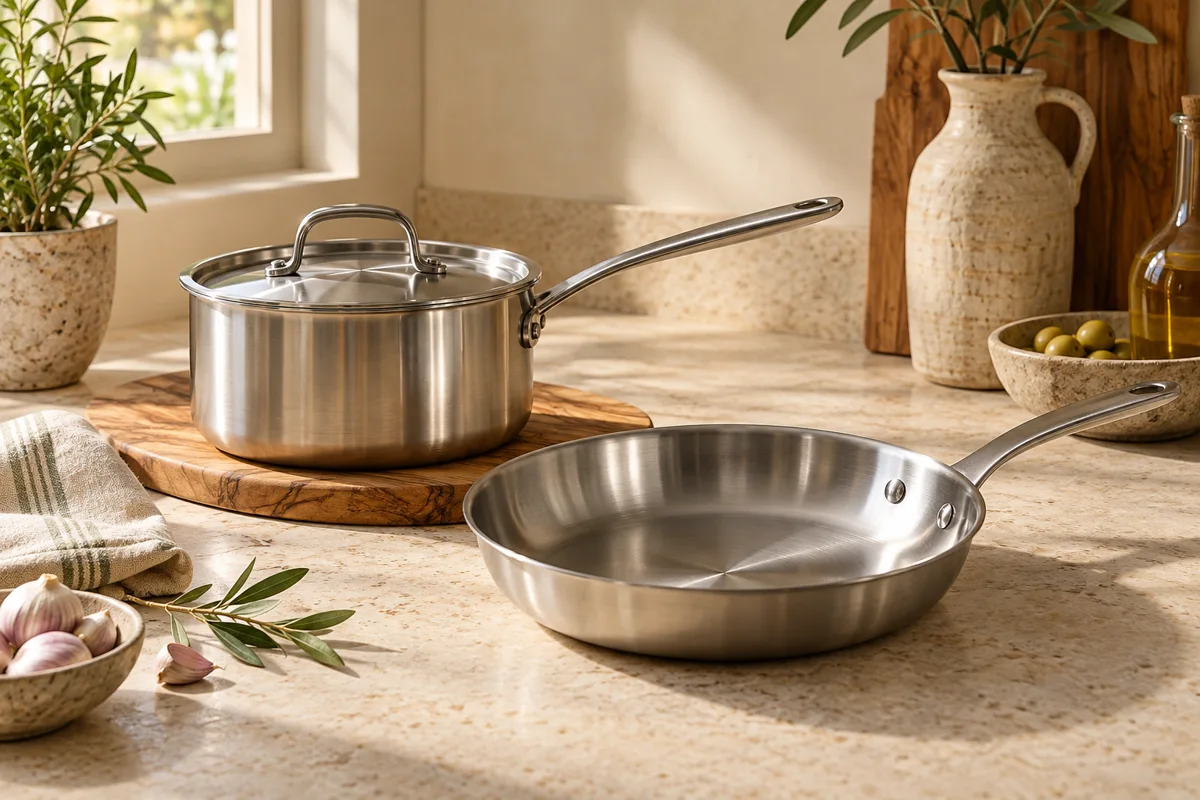 Pots & everyday pans
Start with the meals you actually cook. A saucepan and a versatile frying pan may cover more of your week than a large matching set.
What to compare
Measure your hob and cupboard space; check compatibility with your hob type. Compare usable cooking area, total weight, handle comfort and lid fit.
Read the instructions
Check the care instructions and any oven-temperature limits for the pan, lid and handles separately.
Before buying: which existing pan cannot do this job?
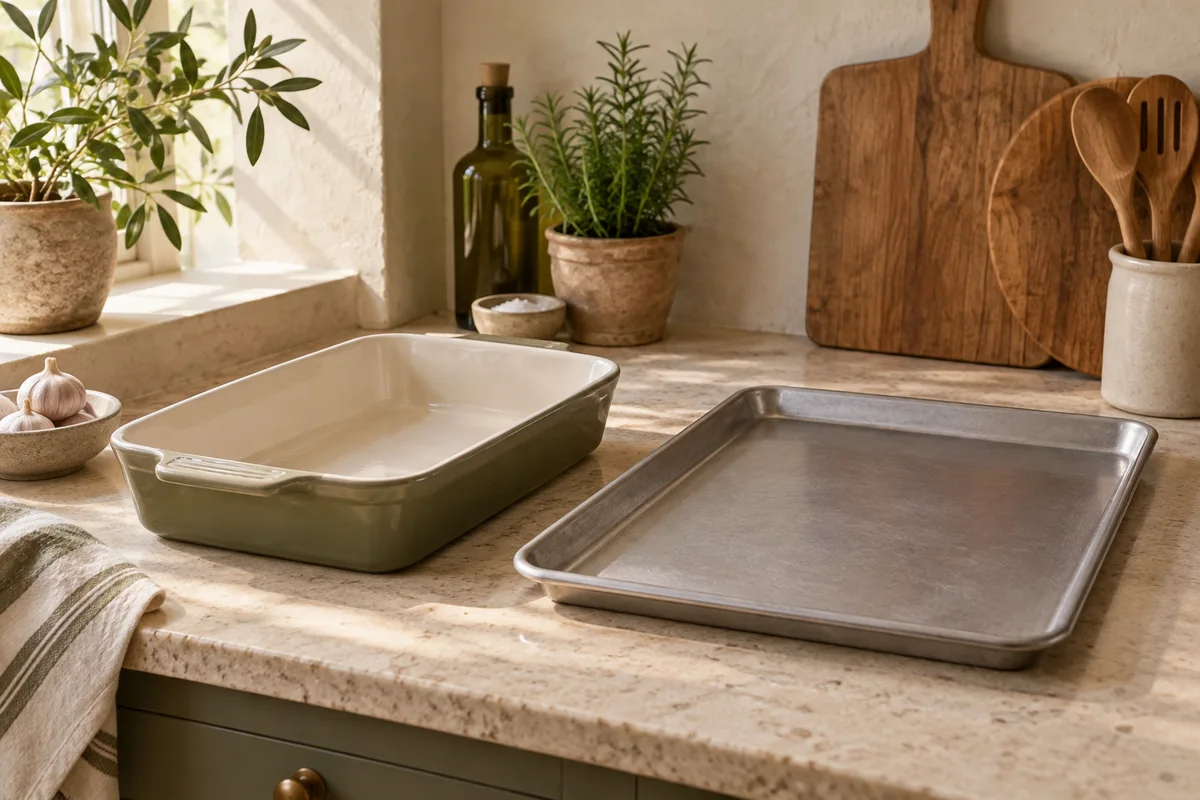 Baking trays & oven dishes
Choose around your oven and typical portions. A dish that fits a recipe but cannot fit comfortably on your oven shelf is not useful.
What to compare
Measure shelf width and depth. Compare internal dimensions, rim height, weight and how easily you can grip it with oven gloves.
Read the instructions
Check the stated temperature limits and care instructions. Do not assume every dish is suitable for the hob, grill or sudden temperature changes.
Before buying: will it fit both the oven and your storage space?
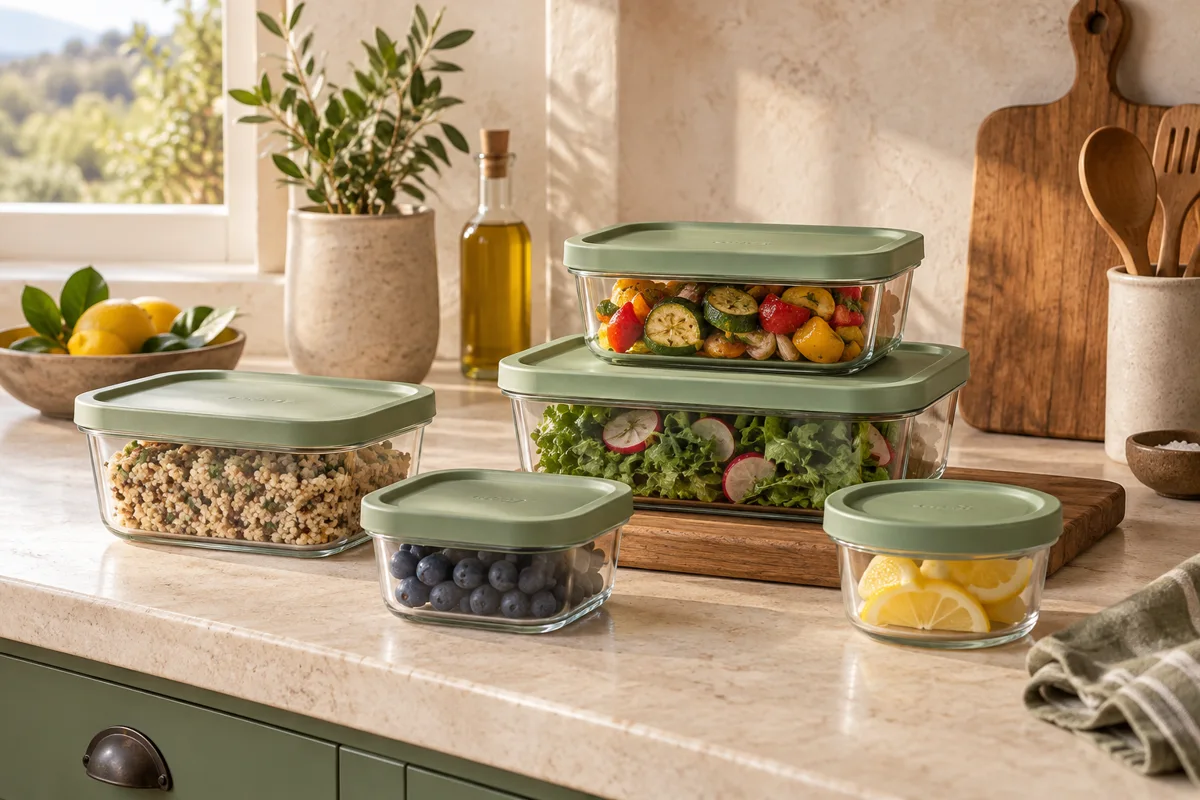 Food-storage containers
Start by matching container sizes to your usual leftovers and lunch portions. Fewer compatible shapes can be easier to organise.
What to compare
Compare usable capacity, stacking, lid fit, visibility and whether replacement lids are available.
Read the instructions
Read the specific freezer, dishwasher and microwave instructions. Separate instructions may apply to the lid and container.
Before buying: do you already have containers with missing lids?
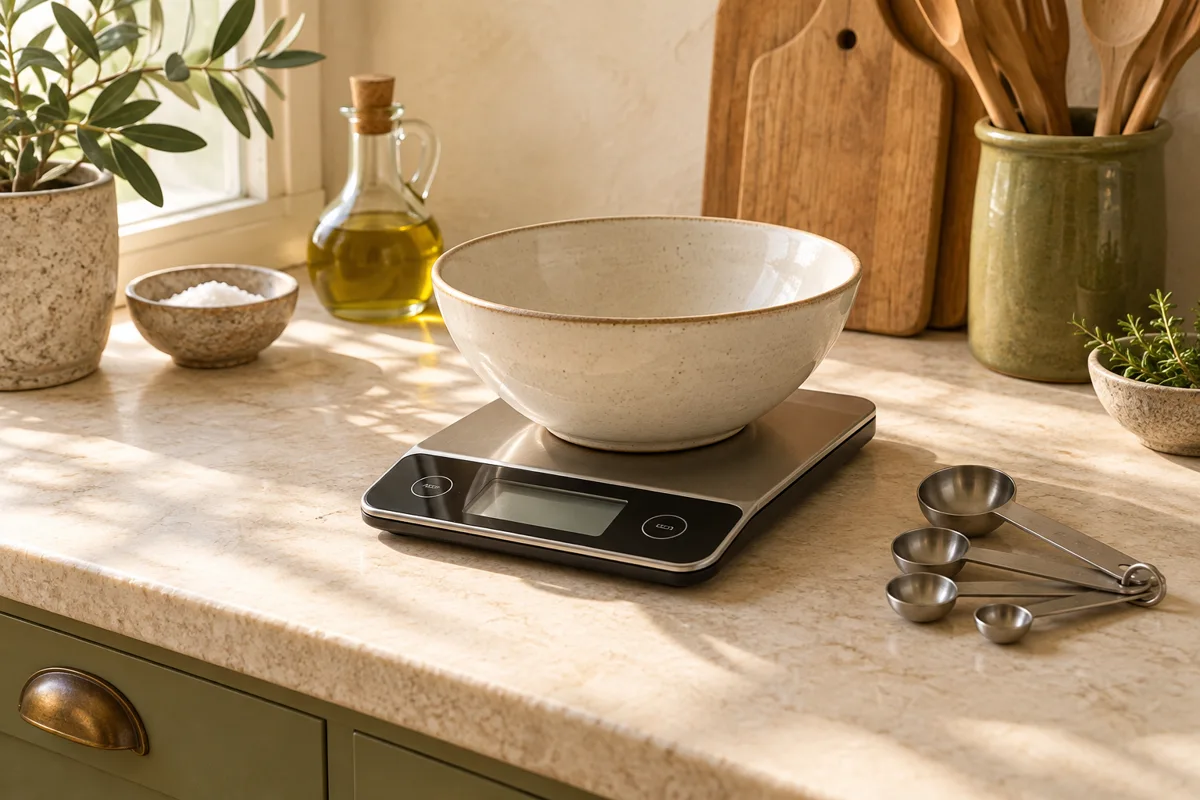 Kitchen scales & measuring tools
Think about the quantities you measure most often. An easy-to-read display can matter more than extra modes.
What to compare
Compare maximum capacity, measurement increments, unit switching and the tare function. Check whether a mixing bowl obscures the display.
Read the instructions
Look at battery type, cleaning instructions and the size of the weighing platform. Avoid confusing displayed increments with verified accuracy.
Before buying: which recipes need measurements your current tools cannot provide?
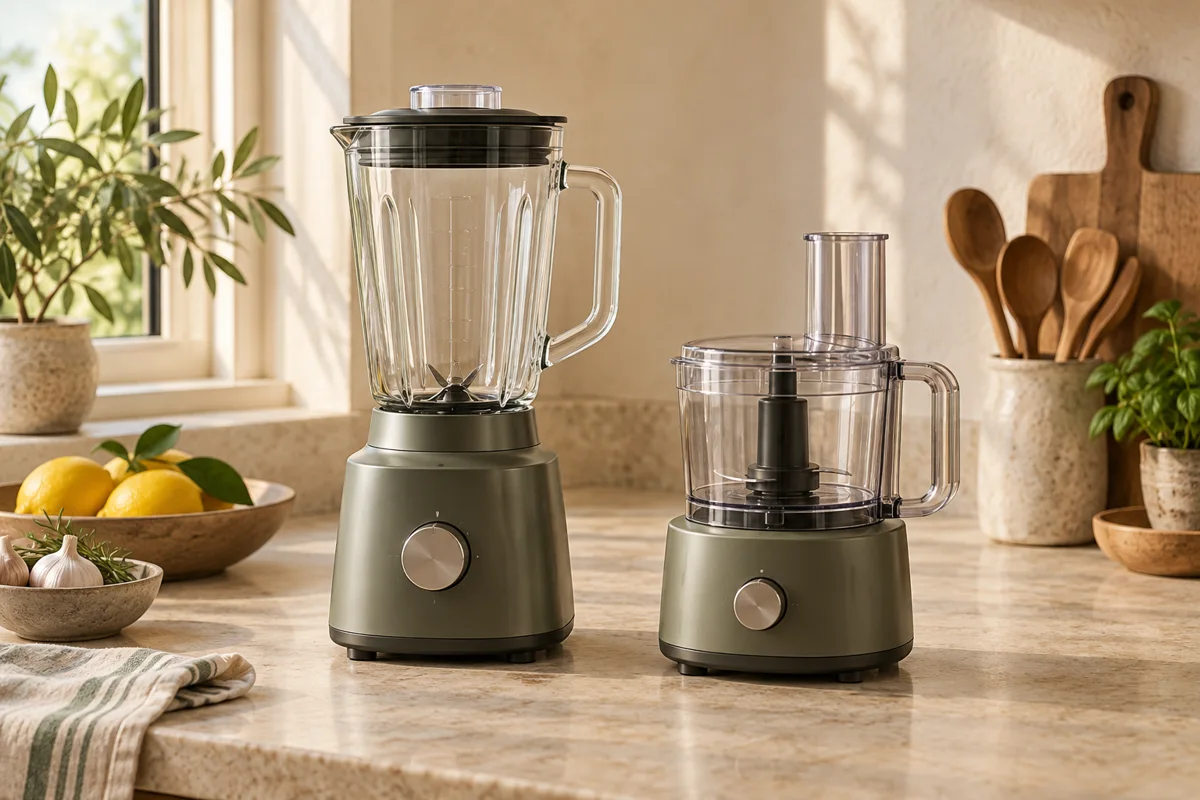 Blenders & food processors
List the tasks first: blending soup, making a smoothie and chopping vegetables can require different features.
What to compare
Compare usable capacity, permitted ingredients, cleaning access, storage footprint and availability of replacement parts.
Read the instructions
Follow the appliance instructions for hot liquids, maximum fill levels and assembly. Do not assume similar-looking appliances support the same tasks.
Before buying: how often will you use it, and where will it live?
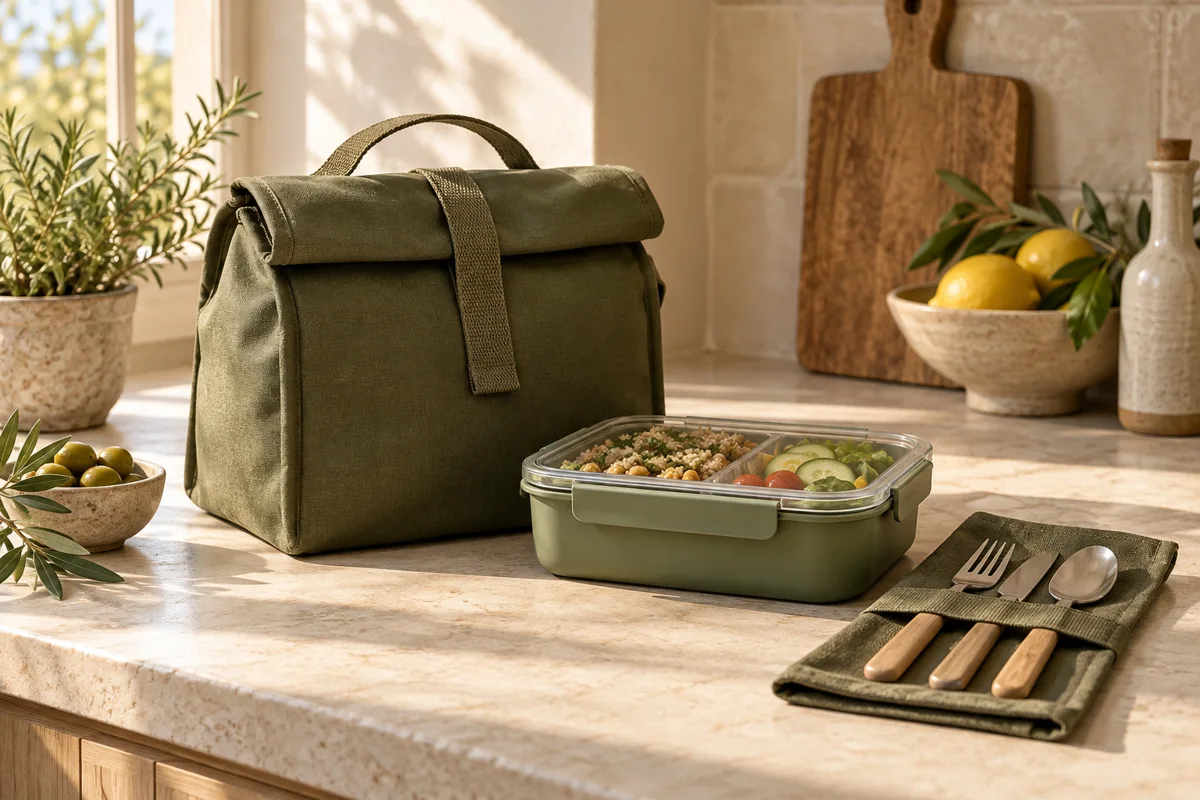 Lunch bags & meal-prep accessories
Choose around the containers and journeys you already use. Measure your lunch box before choosing a bag.
What to compare
Compare opening size, carrying comfort, space for an ice pack and ease of cleaning. Look for clear care instructions.
Read the instructions
An insulated bag is not a refrigerator. Follow appropriate food-storage guidance; this guide does not establish safe holding times.
Before buying: can a simple bag or container you already own meet the need?
Put your kitchen to use
Browse all recipes · Plan your week · Read our review approach